Table Of Content
It uses a part profile from drawings made in a standard sketching software and use the SXF file to do this. With its stronger focus on programming, OpenSCAD may appeal to some while alienating others. It’s not the best for professional purposes, but it’s a great training tool.
Blender [Animation]
3D Printing from AutoCAD – All You Need to Know - All3DP
3D Printing from AutoCAD – All You Need to Know.
Posted: Fri, 11 Aug 2023 07:00:00 GMT [source]
You may want to consider features such as support for slicing, a modeling environment, or surface optimization tools. These can then be imported into a slicer to prepare the model for 3D printing and create a G-code file with all the instructions the printer needs to complete the print. Elsewhere, it also offers mechanical design and analysis tools, useful if you’re printing functional or mechanical 3D parts. SolveSpace exports to all the most common formats, including STL, but also directly to G-code.
Best 3D Printed Shoes in 2023 (Sneakers, Heels & More)
Also, consider checking whether a solution is compatible with your operating system. Finally, look at the project requirements to select the best 3D printing solution suitable for you. There are free 3D printing tools that are ideal for creators designing on a budget. And while this used to feel like a concept for the future, it’s possible now with 3D printing software. These tools translate the idea of an object into data that a 3D printer interprets to create a real-life object. Meshmixer is an Autodesk program designed to work with dynamic high-resolution 3D meshes.
Access this article
The upside of this is that none of the tools are blocked behind a pay wall, so you can tweak your models to your heart’s desire. With a library of literally millions of files, users can find shapes that suit them best and manipulate them as they wish. It also has a direct integration with 3rd party printing services, allowing you to print and have your print at your door-step at the press of a button. Even though it can be a bit too simple to the point of limitation, it serves as a great way to learn about 3D modeling. Years ago, we had to spend lots of money and time to acquire and learn modeling software.
The learning curve is far shorter than some of the more in-depth 3D software out there, making TinkerCAD the perfect 3D modeling software for beginners or children. It also comes with advanced modeling tools such as Boolean operations or extrusion tools to combine and modify those objects. The software also has a powerful library feature that allows users to easily reuse existing shapes and designs. Many 3D printing software tools come equipped with remote control interfaces that allow users to monitor prints in progress through a web browser or mobile device while away from the printer itself. This can be really helpful in the case of needing to intervene at any time during the process.
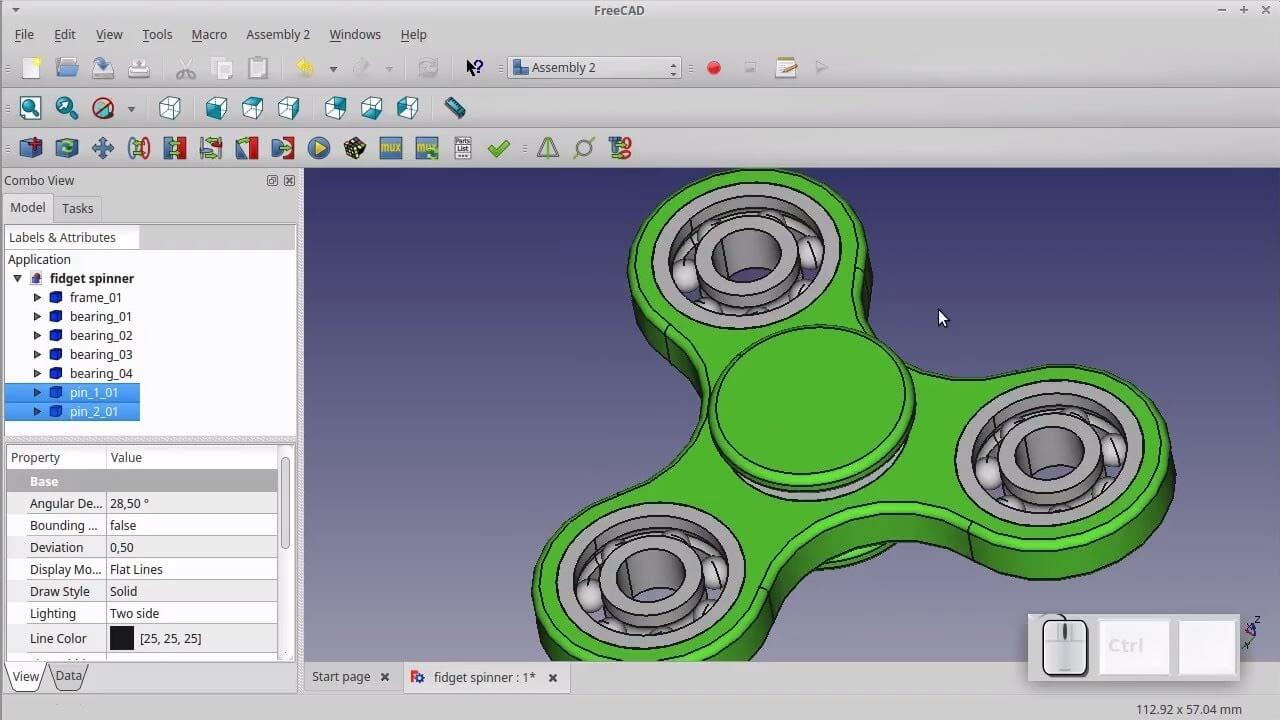
FreeCAD
It doesn’t include all the features, but there’s everything there for those using it to create 3D models for printing. Developed by Autodesk, Fusion360 is a complete CAD environment that’s stacked to the rafters with professional-grade features. You can employ virtually every modeling technique under the sun (parametric, mesh, freeform, etc) to prototype, design, and iterate for virtually any 3D printing application.
Though made by Ultimaker, Cura is compatible with almost any 3D printer you can ever think of, with custom pre-sets for hundreds of the most commonly used printers. Advanced users can tweak their settings according to their needs such as for supports and infills, whereas beginners can use the 3D printing software’s recommended settings for quick and easy printing. The free package includes access to Vectary Studio to create and design models, as well as the ability to export your creations in OBJ or STL file formats, though for other formats you’ll need to upgrade.
Whether you are just starting out with CAD design, or are an experienced designer looking to take things to the next level, you'll find something to suit your needs on this page. The printer can then print a physical, real-world replica of the CAD software-created digital model. Developer AutoDesk also provides an extensive library of tutorials, learning resources, and projects to help you make that first step to creating a CAD design for 3D printing. Here, the idea is to simplify and process the often very complex polygonal models made with Blender to achieve better 3D printer results. Though not innately geared towards 3D printing, the relatively new 3D Print Toolbox and Mesh Analysis features take strides to make Blender a far more 3D printing-friendly program.
The learning curve is not too steep, and Rhino themselves include a wide variety of tutorials to most of the complex tools available. Overall, it’s another good 3D printing software option for designing printable 3D models. If it cost $500 for the exact same feature list, most people wouldn’t bat an eyelid. Some may want a more professional 3D software tool with more advanced creation and editing, but as a free 3D printer design software for beginners, TinkerCAD is a great introduction.
This process makes it possible to quickly prototype ideas or even produce final products without the need for additional production steps like casting or milling. Its simulation, testing, and analysis tools make it an obvious choice if this is an important part of your 3D project. In addition to its basic modeling capabilities, MeshLab also provides a range of plugins for improved functionality. Additionally, AutoDesk Maya is best suited for those interested in animation because they have additional features (like realistic effects from explosions to cloth simulation). Blender is also a good choice for beginners because they have extensive tutorials for how to use the program on their website. However, we recommend checking the respective feature list of the program you have your eye on to double-check this is indeed the case before committing to a purchase.
The software has an easy learning curve and there are advanced features available for professionals at an extra cost. It is especially good for designing interior and exterior architectural projects but also has tools for a diverse range of other purposes. Once designed, you can easily export your models as STL files for 3D printing, and view them in any previewer, as well as posting them to Facebook using their 3D viewing features. Perhaps after ascending TinkerCAD’s shallow learning curve you’ll want something more advanced, but as a tool to learn a 3D printing software modeling tool, TInkerCAD is a fantastic introduction.


No comments:
Post a Comment